

Wound Hygiene: four steps to wound healing
Biofilm is a major barrier to healing: it's present in nearly 8 out of 10 hard-to-heal wounds³ and delays wound healing.⁴ Wound Hygiene sounds simple, but performing these 4 steps at every dressing change can make a big impact on patient outcomes.¹
- Cleanse: Clean it like you mean it! Actively remove surface contaminants, loose debris, slough, softened necrosis, microbes and/or remnants of previous dressings from the wound surface and its surrounding skin.¹ ⁵
- Debride: Debridement that does not achieve pinpoint bleeding may not physically remove the biofilm. Applied mechanical force and shear, in combination with a liquid surfactant or antimicrobial solution, is needed to break up and disrupt biofilm.¹ ⁵
- Refashion: Agitate the wound edges to stimulate the expression of growth factors, to kick start the formation of healthy skin.¹ ⁵ Devitalized tissue, callus, hyperkeratotic debris and senescent cells at the wound edges may be harbouring biofilm. Removing them helps stimulate epithelialisation and wound contraction.
- Dress: Debridement alone does not alter the microbiome composition and biofilm can re-form within hours⁶. Using a dedicated anti-biofilm dressing is a proven final step to pregress wound healing.¹ ⁷
We can provide training and support to run your own Wound Hygiene Challenge. See if Wound Hygiene can progress stubborn and hard-to-heal wounds on your case load.
 ;
;
On-demand webinars: See the evidence for Wound Hygiene in clinical practice
On-demand webinars: See the evidence for Wound Hygiene in clinical practice
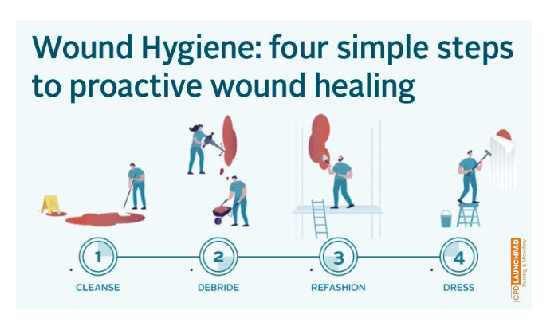
Four simple steps to proactive healing
Use our CPD Launchpad modules to start tracking your practice hours, CPD hours and all your revalidation requirements. Dive into Wound Hygiene in more detail here.
Learn more
The Microbiology of Hard to Heal Wounds
Learn about udnerstanding and detecting biofilm, the development of an anti-biofilm dressing, plus, in vitro and clinical evidence for Aquacel Ag+ Extra.
Watch now1. Torkington-Stokes R, Moran K, Martinez DS, Granara DC, Metcalf DG. Improving outcomes for patients with hard-to-heal wounds following adoption of the Wound Hygiene Protocol: real-world evidence. Journal of Wound Care. 2024;33(5):304-10.
2. Murphy C, Atkin L, Swanson T, Tachi M, Tan YK, Vega de Ceniga M, Weir D, Wolcott R. International consensus document. Defying hard-to-heal wounds with an early antibiofilm intervention strategy: Wound Hygiene. J Wound Care 2020; 29(Suppl 3b):S1–28
3. Malone M, Bjarnsholt T, McBain AJ, James GA, Stoodley P, Leaper D, Tachi M, Schultz G, Swanson T, Wolcott RD. The prevalence of biofilms in chronic wounds: a systematic review and meta-analysis of published data. J Wound Care. 2017 Jan 2;26(1):20-25.
4. Metcalf DG, Bowler PG. Biofilm delays wound healing: A review of the evidence. Burns Trauma. 2013 Jun 18;1(1):5-12.
AP-73019-GBR-ENG-v1
5. Murphy C, Atkin L, Vega de Ceniga M, Weir D, Swanson T. International consensus document. Embedding Wound Hygiene into a proactive wound healing strategy. J Wound Care 2022; 31:S1–S24.
6. Wolcott RD, Rumbaugh KP, James G, Schultz G, Phillips P, Yang Q, Watters C, Stewart PS, Dowd SE. Biofilm maturity studies indicate sharp debridement opens a time- dependent therapeutic window. J Wound Care. 2010 Aug;19(8):320-8.
7. Metcalf DG, Parsons D, Bowler PG. Clinical safety and effectiveness evaluation of a new antimicrobial wound dressing designed to manage exudate, infection and biofilm. Int Wound J. 2017 Feb;14(1):203-213.